

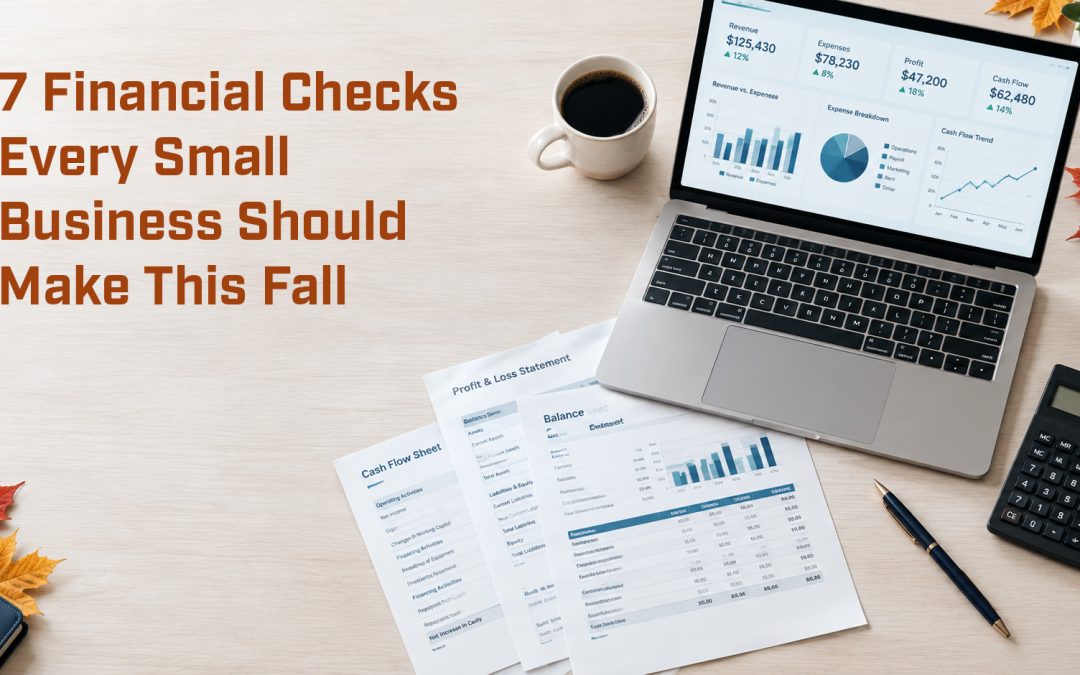
Fall is more than a change of season. It’s an opportunity to take a fresh look at the financial health of your business.
With summer behind us and the final quarter of the year approaching, September is an ideal time to pause, review your numbers and make sure your business is on the right financial track.
For many business owners, the day-to-day demands of running a company leave little time to step back and look at the bigger picture. But waiting until year-end can make it much harder to spot problems, manage cash flow or make strategic decisions.
A simple financial check-in now can give you valuable insight into where your business stands and what you may need to do before the year comes to a close.
Here are seven financial checks every small business should consider making this fall.
- Review Your Year-to-Date Financial Statements
Start by looking at your financial statements for the year so far.
Your profit and loss statement, balance sheet and cash-flow information can provide a snapshot of how your business is actually performing.
Don’t just look at your total revenue. Compare your current numbers with:
-
- The same period last year
- Your original budget or projections
- Your business goals for the year
- Previous months or quarters
Look for trends.
Are sales increasing? Are expenses growing faster than revenue? Has your profit margin changed? Is your cash position where you expected it to be?
The answers can help you determine whether you’re on track or whether adjustments are needed before the end of the year.
Your bookkeeping should help you make decisions
Accurate bookkeeping isn’t simply about keeping records for tax purposes. Current, reliable financial information gives you the ability to make better business decisions throughout the year.
- Check Your Cash Flow
A profitable business can still experience cash-flow problems.
That’s because profit and cash aren’t always the same thing. You may have completed work and recorded the revenue, for example, but still be waiting for your customer to pay.
Take a close look at your expected cash coming in and going out over the next few months.
Consider:
-
- Outstanding customer invoices
- Upcoming supplier payments
- Payroll commitments
- Tax obligations
- Loan or financing payments
- Planned equipment or inventory purchases
- Seasonal changes in revenue
A basic cash-flow forecast can help you identify potential shortfalls before they become urgent problems.
If cash flow is an area you’re concerned about, TNI Business Services can also assist with cash-flow, budgeting and scenario-planning services.
- Review Your Accounts Receivable
If customers owe your business money, now is a good time to find out exactly how much and how long those balances have been outstanding.
Run an accounts receivable aging report and identify invoices that are:
-
- Current
- 30 days overdue
- 60 days overdue
- 90+ days overdue
Don’t assume an unpaid invoice will automatically take care of itself.
Consistent follow-up on outstanding invoices can improve cash flow and help prevent a growing accounts receivable balance from becoming a bigger problem.
It may also be worth reviewing your payment terms. If customers regularly take longer to pay than expected, your existing terms may need to be revisited.
- Look for Expenses That Are Eating Into Your Profits
Business expenses have a tendency to creep upward over time.
A subscription you signed up for two years ago may no longer be necessary. A service provider may have increased its rates. A category of spending that once made sense may no longer provide the same value.
Review your expenses with a critical eye.
Ask:
Is this expense helping my business generate revenue, operate more efficiently or achieve an important goal?
That doesn’t mean every expense needs to be eliminated.
Instead, the goal is to understand where your money is going and make sure your spending continues to support your business objectives..
- Make Sure Your Books Are Actually Up to Date
This is one of the simplest and most important checks you can make.
If your books are several months behind, your financial reports aren’t giving you a current picture of your business.
Before entering the final quarter, make sure you’ve addressed items such as:
-
- Bank and credit-card reconciliations
- Accounts receivable
- Accounts payable
- Payroll transactions
- GST/HST records
- Expense categorization
- Missing receipts and documentation
- Outstanding bookkeeping adjustments
The more current your books are, the more useful your financial information becomes.
And if your bookkeeping has fallen behind, don’t wait until year-end to catch up.
- Start Thinking About Year-End Now
December may seem far away, but year-end has a way of arriving quickly.
Getting organized in September gives you several months to identify and resolve issues before tax preparation and year-end reporting begin.
This is a good time to:
-
- Review your bookkeeping for errors or inconsistencies
- Organize receipts and supporting documentation
- Identify unusual transactions
- Review outstanding receivables and payables
- Discuss significant purchases or expenses with your accountant
- Consider upcoming tax obligations
- Make sure your bookkeeping is current
Early preparation can make year-end considerably less stressful.
It can also give you more time to make informed decisions before the calendar year closes.
- Revisit Your Business Goals
Finally, look beyond the numbers.
At the beginning of the year, you probably had goals for your business.
Maybe you wanted to:
-
- Increase revenue
- Improve profitability
- Hire additional employees
- Reduce debt
- Increase your cash reserve
- Expand into a new market
- Invest in equipment
- Take more time away from the business
How are you doing?
September gives you enough time to make adjustments before the year ends.
If you’re ahead of schedule, that’s great. If you’re behind, there’s still time to take action.
And if your business has changed significantly since January, your original goals may no longer make sense. That’s okay too.
Your financial information should help you establish goals based on where your business is today, not where you expected it to be eight months ago.
Don’t Wait Until Year-End to Look at Your Numbers
Your business doesn’t need to wait for tax season to have a financial checkup.
A September review can help you identify opportunities, address potential problems and make more informed decisions for the final months of the year.
More importantly, it can give you something every business owner needs: confidence in the numbers behind your business.
At TNI Business Services, we help businesses across Canada stay organized with customized bookkeeping, payroll and financial reporting solutions. Our goal is to provide business owners with accurate, useful financial information so they can spend less time worrying about their books and more time focusing on their business.
Ready to Get Your Business Finances Back on Track?
Whether your books are up to date and you simply want better financial insight, or you’re already behind and don’t know where to start, we can help.
Let TNI Business Services take the books off your plate.
Quick Fall Financial Checkup
Not sure where to start? Ask yourself these five questions:
1. Are my books current?
2. Do I know how profitable my business is right now?
3. Do I know how much money customers currently owe me?
4. Do I have enough cash available to cover the next few months?
5. Do I know what I need to accomplish before year-end?
If you answered “no” to one or more of these questions, it may be time for a financial checkup.
Recent Comments